Stables, trail ride outfitters, lesson barns, horse camps and farms with pony rides all use this kind of waiver.
Equine activity laws
More than 40 US states have equine activity liability laws that limit the liability of stables and professionals for the inherent risks of horse activities. Many of these laws require a specific warning notice to be posted at the stable and included, word for word, in every written contract or waiver, often in a minimum type size. This template has a clearly marked place for that notice. Check your state's statute and paste the exact required wording; leaving it out can mean losing the statute's protection.
What the template covers
- The unpredictable nature of horses and specific equine risks
- Rider experience disclosure and weight limits
- Helmet and footwear requirements
- Rules for trail rides, lessons and ground handling
- A minors section for parents
- Release, indemnification and emergency medical authorization
Tips
Ask riders to state their real experience level and weight before you match them with a horse; overstating experience is common. Require ASTM/SEI-certified helmets for minors and strongly recommend them for adults. Have a local attorney confirm the warning notice and the rest of the waiver comply with your state's law.
With FairWaiver, riders can sign before they arrive, and your wranglers can confirm each rider's signed waiver on a tablet at the barn.
Collect it online in three steps
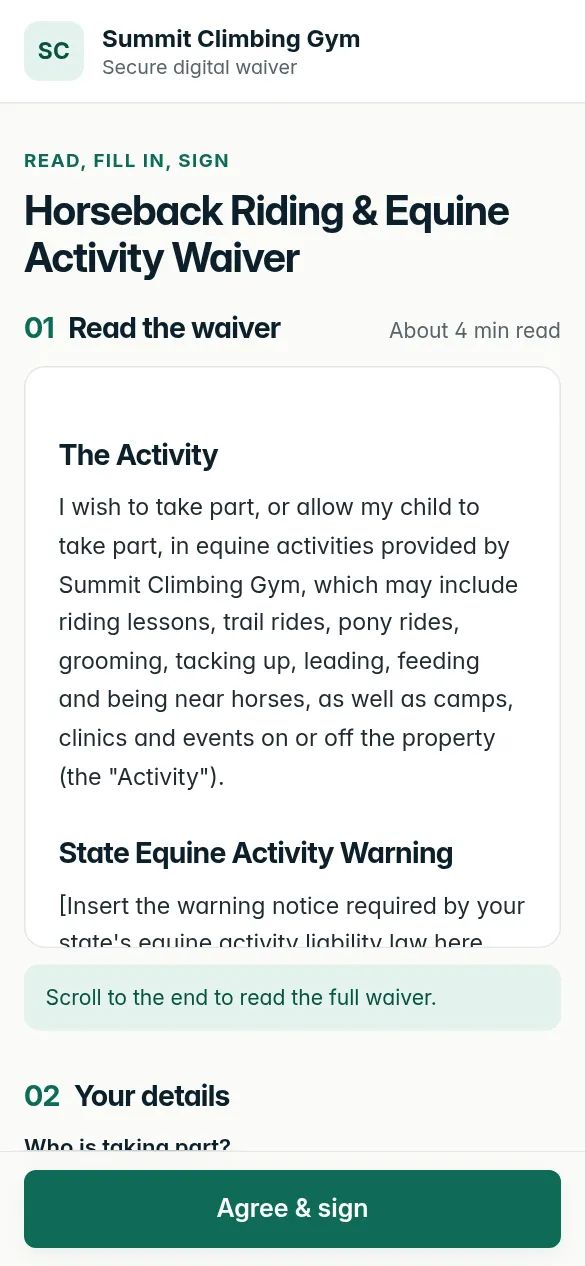
- Start from this template. Add your business name and logo, change any wording, and choose what to collect: date of birth, emergency contact, children's names or your own questions.
- Share it. Send the link with booking confirmations, print the QR poster for your door, embed it on your website, or put a tablet at the front desk in kiosk mode.
- Every signature is filed. Customers sign with a finger on their phone. You get a PDF with the exact text they agreed to, the time, the device and a tamper-evident fingerprint, and they get a copy by email.
Horseback Riding & Equine Activity Waiver: full template
Horseback Riding & Equine Activity Waiver
The Activity
I wish to take part, or allow my child to take part, in equine activities provided by [Business Name], which may include riding lessons, trail rides, pony rides, grooming, tacking up, leading, feeding and being near horses, as well as camps, clinics and events on or off the property (the "Activity").
State Equine Activity Warning
[Insert the warning notice required by your state's equine activity liability law here, using the exact wording and any formatting the statute requires.]
The Nature of Horses
I understand that horses are large, powerful animals that can be unpredictable regardless of their training, temperament or past behavior. A horse may react to sounds, movements, objects, other animals, people or its surroundings in ways that cannot be anticipated. I understand that horses may:
- spook, shy, bolt, buck, rear, kick, bite, stumble, fall or step on people;
- move suddenly while being led, tied, groomed, mounted or dismounted;
- react to other horses, dogs, wildlife, vehicles, wind, flags or loud noises; and
- behave differently with an inexperienced rider.
Risks of Riding and Handling Horses
I understand that the Activity carries inherent risks that cannot be eliminated, including:
- falling or being thrown from a horse, which can cause fractures, head injuries, spinal cord injuries, paralysis or death;
- being kicked, bitten, crushed, stepped on or dragged;
- failure or movement of tack and equipment, such as saddles slipping or bridles breaking;
- trail conditions including uneven or slippery ground, branches, water crossings, holes, rocks and steep terrain;
- weather, heat, insects, plants and wildlife; and
- collisions with other horses and riders, and delays in reaching medical help on remote trails.
Rider Disclosure
I have honestly described my riding experience and my weight, height and physical condition to [Business Name]. I understand that [Business Name] relies on this information to choose a suitable horse and activity, and that overstating my experience increases my risk. I understand [Business Name] may refuse to let me ride if I exceed its weight limit or if it believes riding would be unsafe for me.
Rider Rules
I agree to:
- wear a properly fitted, certified riding helmet when required by [Business Name], and I understand helmets are strongly recommended for all riders;
- wear closed-toe boots or shoes with a small heel, and long pants;
- follow all instructions from guides and instructors and stay in my assigned position on trail rides;
- keep a safe distance from other horses and never walk directly behind a horse;
- not run, trot or leave the group unless instructed;
- not ride under the influence of alcohol or drugs; and
- tell staff immediately if I feel unsafe or unable to control my horse.
Health
I confirm that I have no medical condition, such as a heart, back, bone or balance condition, pregnancy or recent surgery, that would make the Activity unsafe for me, or that I have consulted a physician. I have disclosed allergies, including to horses, hay or insect stings.
Assumption of Risk and Release
I voluntarily accept all inherent risks of equine activities. To the fullest extent permitted by law, I release [Business Name], its owners, employees, guides, instructors and the owners of horses and land used for the Activity from all claims for injury, death or property damage arising from the Activity, including claims based on ordinary negligence, except claims for gross negligence or willful misconduct and any liability that cannot be waived under applicable law.
Indemnification
I will indemnify [Business Name] against claims arising from my failure to follow rules or instructions, or from injury or damage caused by me.
Medical Treatment
If I or my child are injured, I authorize [Business Name] to provide first aid and obtain emergency medical treatment and transport, at my expense.
Minors
If the rider is under 18, I am their parent or legal guardian and agree to this waiver on their behalf and my own, to the extent permitted by law. I will make sure the minor follows all rules and wears a helmet.
General
If any part of this waiver is unenforceable, the rest remains in effect. It is governed by the laws of the state or country in which [Business Name] operates.
Acknowledgements (signer ticks each)
- I am at least 18 years old or am the parent or legal guardian of the rider.
- I understand horses are unpredictable and riding carries a risk of serious injury or death.
- I have honestly disclosed my riding experience, weight and relevant health conditions.
- I will wear a helmet as required and follow all instructions from guides and instructors.
- I have read the state equine activity warning and release [Business Name] as described, to the extent permitted by law.
Replace “[Business Name]” with your business name, FairWaiver does this automatically. This template is general information, not legal advice. Laws vary by state, so have a local attorney review it.
Frequently asked questions
Do I need a waiver for horseback riding?
Most stables and trail ride operators require one, and insurers commonly expect it. A riding waiver records that the rider understood the risks of equine activities and accepted them before riding.
What is an equine activity liability act?
It is a state law that limits the liability of stables, instructors and horse owners for injuries caused by the inherent risks of horse activities. Many of these laws require a specific warning notice to be posted and included in written contracts. Check your state's statute and include the exact required wording.
Are horseback riding waivers enforceable?
In many states a riding waiver combined with the protection of an equine activity statute offers meaningful protection for inherent risks. Neither usually covers negligence such as providing faulty tack or knowingly giving a dangerous horse to a beginner. Have a local attorney review your waiver.
Should riders wear helmets?
Safety organizations recommend that all riders wear certified equestrian helmets, as head injuries are one of the most serious riding risks. Many stables require helmets for minors and all lesson riders.
Why do stables ask for my weight?
Horses can only safely carry a certain proportion of their own body weight, including tack. Stables set rider weight limits to protect both horses and riders, and accurate information helps them choose a suitable horse.